>
Doctor of Nursing Practice

Nurse Anesthesia Program

To meet the growing demand for nurse anesthetists, Vanderbilt School of Nursing will welcome its first cohort of students in summer 2026.

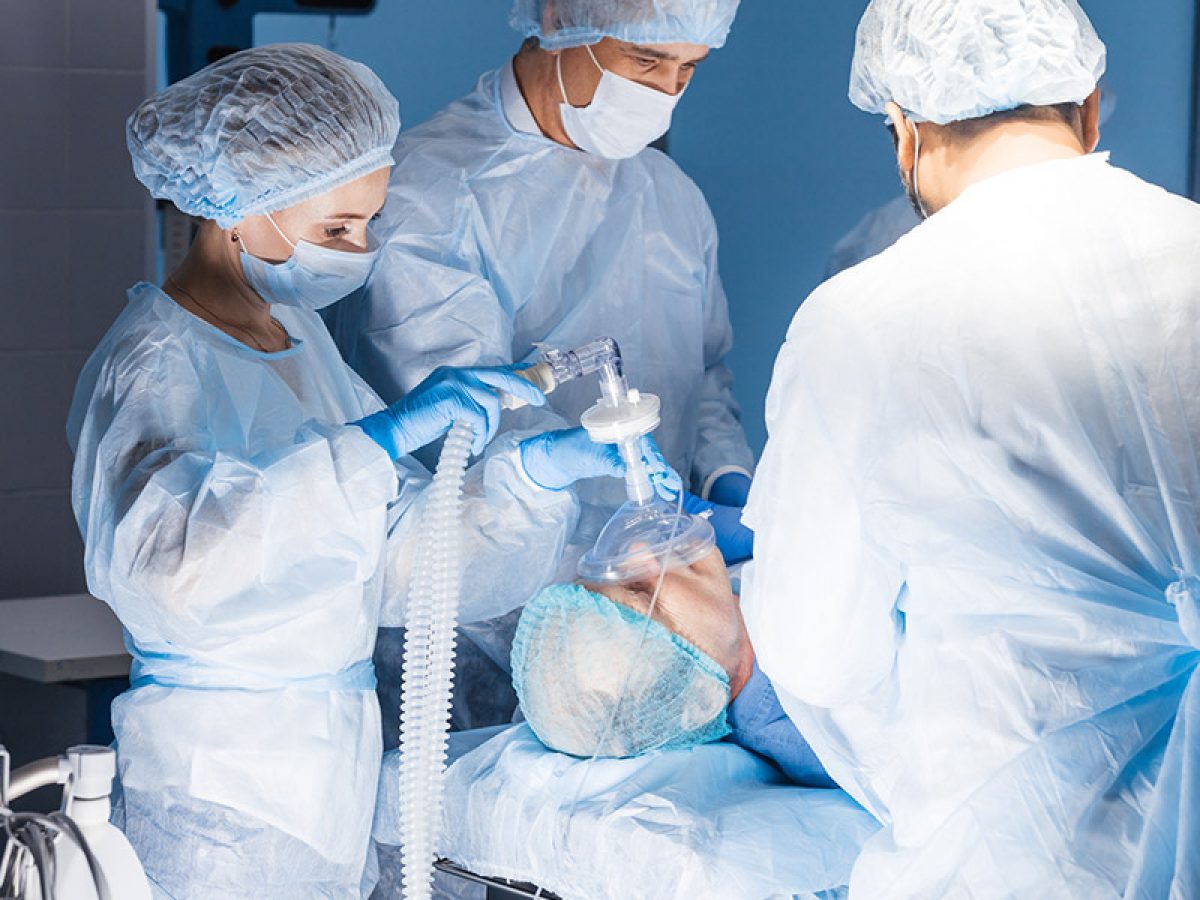
a nurse anesthetist adminstering anesthesia to a patient during an operation
Section Contents

Program Highlights

  • Summer start (late April) 
  • Full-time, in-person format
  • 36 months/9 semesters 
  • 2,500 clinical hours, 90 credits
  • Doctor of Nursing Practice degree awarded

Program Requirements

  • Hold a baccalaureate or graduate degree in nursing or an appropriate major from an accredited college or university.
  • Hold an unencumbered license as a registered professional nurse and/or an APRN in the United States or its territories or protectorates.
  • Possess a minimum of 1-year full-time work experience, or its part-time equivalent, as a registered nurse in a critical care setting within the past 5 years. The applicant must have developed as an independent decision maker capable of using and interpreting advanced monitoring techniques based on knowledge of physiological and pharmacological principles.
  • Have a minimum cumulative Grade Point Average (GPA) of 3.00 on a 4.00 scale.
  • Have taken a statistics course.

Key Dates

Summer 2026 Start

  • Applications Open - August 2025
  • Application Deadline - October 15, 2025
  • Interviews - Winter 2025
  • Admission Decisions - February 2026
  • Classes Begin - April 2026

Summer 2027 Start

  • Applications Open - March 1, 2026
  • Application Deadline - May 15, 2026
  • Interviews - Summer 2026
  • Admission Decisions - Fall 2026
  • Classes Begin - Summer 2027

The Vanderbilt Difference

  • Ranked among the nation's Top 4 graduate nursing programs
  • Esteemed nursing education built upon Vanderbilt’s 100-year history of leadership and excellence in nursing, teaching, practice and research  
  • Quality training from world-renowned experts at Vanderbilt University Medical Center 
  • Robust clinical experience with unmatched exposure to all types of surgical cases 

Start your nurse anesthesia career with a brand-new program backed by Vanderbilt excellence. 

*  Vanderbilt’s nurse anesthesia DNP program is currently pending initial accreditation by the Council on Accreditation of Nurse Anesthesia Educational Programs (COA). No students may be enrolled in the program until initial accreditation is received.  

The opportunity to utilize my clinical practice experience, teaching and leadership skills to create a world-class nurse anesthesia educational program is a true honor. The resources and support of both the university and the medical center have set the stage for a truly remarkable educational experience for our future students."

Brent Dunworth Brent Dunworth, DNP, MBA, CRNA, NEA-BC, FAANA
Director, Nurse Anesthesia Program
Joint appointment as VUSN associate professor of nursing and with the School of Medicine as associate professor of clinical anesthesiology

Robust Clinical Experience & Guaranteed Clinical Placement  

Students will receive 2,500 hours of comprehensive clinical training from world-renowned experts at Vanderbilt University Medical Center, a nationally recognized academic medical center that advances medical knowledge through research and education.  

Vanderbilt School of Nursing Nurse Anesthesia clinical sites collectively serve over 140,000 surgical patients throughout the lifespan annually to provide unmatched exposure to all types of surgical cases including: 

  • Robotic-assisted surgery 
  • Organ transplantation 
  • Level 1 trauma  
  • Cardiothoracic surgery 
  • Neurosurgery 
  • Orthopedics 
  • High-risk oncology 
  • Obstetrics 
  • Pediatrics 

The Vanderbilt Health system encompasses 7 hospitals and more than 180 clinics, including the main medical center campus that is adjacent to Vanderbilt University School of Nursing and additional locations serving patients in communities throughout Middle Tennessee.     

What are the Clinical Sites?

  • Vanderbilt University Hospital

    Known for its expertise in complex and innovative surgical procedures, over 70,000 of which are performed annually. Key surgical services offered include robotic-assisted surgery, organ transplantation, Level 1 trauma center, cardiothoracic surgery, neurosurgery, orthopedics, obstetrics, and high-risk oncology. 

  • Monroe Carell, Jr., Children’s Hospital at Vanderbilt

    Offers a wide range of specialized surgical services for pediatric patients. Around 25,000 anesthetics are performed annually for otolaryngology, urology, general surgery, orthopedic surgery, trauma, neurosurgery, transplantation and cardiothoracic surgery.  

  • Vanderbilt Outpatient Surgery

    Serves over 2,000 patients annually specializing in a variety of outpatient surgical procedures, such as orthopedic, general, plastic and urological surgeries. 

  • Vanderbilt Belle Meade

    A multi-specialty facility with seven operating rooms to care efficiently for over 6,000 patients annually across several specialties including orthopedics, spine, urology and gynecology.  

  • Vanderbilt Surgery Franklin

    A high-volume, low-acuity outpatient surgery center providing over 3,000 procedures annually focusing on orthopedic surgery including foot and ankle, hand and upper extremity, hip preservation, shoulder, pain management, minimally invasive spine and pain management. Nurse Anesthetists use extensive regional anesthesia blocks. 

  • Vanderbilt Health Endoscopy Center – One Hundred Oaks

    Equipped with five procedural suites offering upper and lower endoscopy and endoscopic ultrasound for nearly 10,000 patients annually. Nurse Anesthetists function in a non-medically directed fashion. 

  • Vanderbilt Wilson County Hospital

    Located in Lebanon, TN, about 30 miles outside of Nashville, VWCH serves patients across the lifespan providing nearly 10,000 anesthetics annually.  This is a Level 3 trauma referral center with a cardiac catheterization lab and obstetrical service that provides outpatient surgery, gastroenterology and other minimally invasive procedures.  

  • Vanderbilt Tullahoma-Harton Hospital

    Located in Tullahoma, TN, about 75 miles outside of Nashville, VTHH offers a full-service obstetrical unit, gastroenterology and general and orthopedic surgery for adult and pediatric patients. 

  • Vanderbilt Bedford Hospital

    Located in Shelbyville, TN, about 50 miles outside of Nashville. Over 2,000 surgical procedures are provided per year including general, cardiology, plastic, orthopedic, podiatry and more. Nurse anesthetists often practice in a non-medically directed model of care. 

  • Monroe Carell, Jr., Children’s Hospital at Vanderbilt – Murfreesboro

    Located in Murfreesboro, about 40 miles outside of Nashville, TN, this facility administers nearly 5,000 anesthetics annually. Surgical specialties include otolaryngology, gastroenterology, orthopedics and urology, as well as specialized imaging services.  

  • Vanderbilt Surgery Center – One Hundred Oaks

    Coming Soon! A brand-new 14-room surgical suite will provide comprehensive outpatient surgical and anesthetic care to patients including general, otolaryngology and various other specialties.  An estimated 10,000 cases will be performed here each year. 

Watch a recent info session with program director Brent Dunworth

Frequently Asked Questions


Applying

  • Is the GRE required?

    No, the GRE is not a requirement to apply for the Nurse Anesthesia Program.

  • What is the minimum GPA to apply and to be competitive?

    The minimum cumulative GPA to apply for this program is 3.0.

  • Is the admissions review holistic or point-based? What factors are weighed most heavily?

    The admissions process is holistic, and we review all information that is requested on the application.

  • What does a competitive applicant profile look like?

    After we admit our first cohort, we will be able to provide a profile of the class.

  • Is current/recent ICU experience preferred over prior ICU experience (e.g., currently in the cath lab)?

    We will accept recent ICU experience within the past 5 years.

  • Is the CCRN required or recommended? If in progress, by when must it be completed (application deadline, interview, or program start)?

    Required. It must be submitted by the application deadline for consideration.

  • Are BLS/ACLS/PALS required? Are AHA-issued cards required? Where/how are these indicated in the application?

    Yes. Share in the open-ended responses as appropriate.

  • Are pediatric CCRN and neonatal CCRN credentials accepted?

    Pediatric and adult CCRN are accepted; neonatal CCRN is not.

  • How many students will be accepted for the inaugural cohort, and what is the long-term target cohort size?

    Between 20-24 in the first cohort.The target cohort size is 30.

  • Will the program use a waitlist, and how does it work?

    Yes, the program will use a waitlist.  Should additional spots become available, students on the waitlist will be notified.  The waitlist will remain open until classes begin.

  • Is a current supervisor required for one of the recommendations? Will a charge nurse qualify?

    Yes, a current supervisor is a required recommender.  A charge nurse would not be considered a supervisor.

  • If an applicant recently changed roles/units, can a previous ICU manager serve as the supervisor reference?

    Yes, provided that they have supervised you within the past year.

  • Are academic (professor), CRNA, and physician recommendations acceptable, and is there a preferred mix?

    Those are acceptable recommenders, and it is up to the applicant to determine which recommenders can best speak to their professional work and potential for doctoral study in a nurse anesthesia program.

  • Is a doctoral degree required for recommenders?

    No. 

  • Is the recommendation a rating form, a narrative letter, or both?

    The recommendation is a rating form with several open-ended responses.  

  • Is CRNA shadowing required or recommended? If so, how many hours and how should they be documented?

    It is not required, but strongly recommended.

Program and Clinical Structures

  • When during training will SEEs be taken?

    Approximately 12 months and 6 months prior to program completion.

  • Is the program integrated or front-loaded? When do clinicals start?

    The program is integrated with clinical experience beginning in semester 3.

  • How are clinical rotations scheduled and what is the duration of each?

    Clinical rotations will be scheduled by program faculty to ensure that all students get exceptional exposure to all facets of required practice. 

  • How do clinical sites balance SRNA opportunities alongside anesthesiology residents? Are there any CRNA-only/independent practice sites? What anesthesia care models are used?

    Vanderbilt University Medical Center also has a anesthesiology residency program with a spectacular reputation.  The medical center performs nearly 300,000 anesthetics per year, however, so Vanderbilt has carefully ensured that there is adequate experience for all learners, both student nurse anesthetists and anesthesiology residents.

    We have various models of anesthesia care, including medical direction and non-medically directed.

  • Will students train on a variety of anesthesia machines/equipment?

    Yes. 

  • Will the curriculum include regional anesthesia and ultrasound-guided techniques?

    Yes, we will have extensive learning of ultrasound techniques.

  • How many days per week are students on campus/in class versus in clinical?

    It varies by semester; clinical will be 3 days per week beginning in semester 5

  • Are students allowed to work during the program? If yes, what limits/restrictions apply?

    We do not recommend employment during the program.

ICU Experience

  • How much ICU RN critical care experience is required, and must it be consecutive?

    At least one year of full-time experience within the past 5 years

  • By when must the ICU experience be completed (application deadline or program start), and does time on orientation count?

    By program start date; orientation does not count.

  • Will part-time ICU experience count (e.g., two years part-time equating to one year full-time)?

    Yes.

  • Which settings count as acceptable critical care experience? (Adult ICU, PICU, NICU, Level 1 trauma ED, Level 1 trauma PACU, flight nursing, ICU NP/ACNP, Neonatal NP)

    Critical care experience must meet the definition set forth by the Council on Accreditation of Nurse Anesthesia Educational Programs:  "Critical care experience must be obtained in a critical care area within the United States, its territories or a US military hospital outside of the United States. During this experience, the registered professional nurse has developed critical decision making and psychomotor skills, competency in patient assessment, and the ability to use and interpret advanced monitoring techniques.

    A critical care area is defined as one where, on a routine basis, the registered professional nurse manages one or more of the following: invasive hemodynamic monitors (e.g., pulmonary artery, central venous pressure, and arterial catheters), cardiac assist devices, mechanical ventilation, and vasoactive infusions. Examples of critical care units may include but are not limited to: surgical intensive care, cardiothoracic intensive care, coronary intensive care, medical intensive care, pediatric intensive care, and neonatal intensive care. Those who have experiences in other areas may be considered provided they can demonstrate competence with managing unstable patients, invasive monitoring, ventilators, and critical care pharmacology; however, programs are responsible for determining whether the applicants’ experiences are equivalent to those specified in the above examples.

  • Is there a preference for adult ICU over pediatric ICU experience?

    No.

Interviews

  • When will interview invitations be sent?

    Mid-December. 

  • How many applicants will be interviewed?

    Up to 80.

  • Will interviews be virtual or in person?

    They will be virtual and will take approximately 60 minutes to complete.

  • What should applicants expect in the interview?

    The virtual interview will be a mix of video as well as written response questions. 

Research & Travel

  • Beyond Kenya, what international sites are available or being developed?

    Cameroon.

  • Are international experiences optional? What are the costs, and are grants/scholarships available?

    Yes, if offered, they are optional.  We do not have any additional information at this time on costs or financing.

  • Are there research opportunities outside of the required scholarly project?

    Yes, we have many faculty who conduct research and are willing to mentor interested students.

Student Life & Support

  • Are there interprofessional experiences with CRNAs/DNP students? How does participation fit into the curriculum and timeline?

    Nurse anesthesia students will enroll in DNP courses with other advanced practice nursing students. This will afford the opportunity to understand the roles and functions of other future APRNs as leaders in health care.  Additionally, nurse anesthesia students will have simulation events with anesthesiology physician residents and nurse midwifery students.

  • What systems are in place to ensure students feel supported academically and clinically as the program establishes itself? Are there student groups/clubs/resources for nurse anesthesia students?

    Students will have an academic adviser who will meet with them at least once per semester and as needed.  In addition, Vanderbilt University School of Nursing’s Office for Student Affairs is responsible for the organization and oversight of a comprehensive student affairs program that supports the school’s mission, meets the needs of a diverse population and fosters student engagement. The office coordinates and oversees policies, programs and services that support non-academic student success. Office staff and leadership coordinate and advise all student nursing organizations, develop and monitor protocols that foster and support scholarly activities, coordinate and manage community outreach and advocacy efforts. The Office of Student Affairs holds responsibility for planning and implementation of the Pinning and Commencement ceremonies for VUSN, as well as new student orientation and composite photography.  More details can be found at https://nursing.vanderbilt.edu/current-students/student-affairs/.

  • Are there Vanderbilt-coordinated volunteer opportunities students can participate in?

    Yes, VUSN student organization can be found at https://nursing.vanderbilt.edu/current-students/student-organizations/.

  • Could a DNP-CRNA student-only peer support/mentorship group be created for the inaugural cohort?

    Of course it can!

Transfer Credit

  • Does the website note about applicants with a master's (e.g., MHA) and DNP post-master certificate pathways apply in any way to the CRNA program?

    No, but we would evaluate up to 6 credits for consideration of transfer.  Courses taken at Vanderbilt that are part of the active nurse anesthesia curriculum would be considered to be fulfilled.

  • Can prior graduate courses (Advanced Pathophysiology, Advanced Pharmacology, Advanced Health Assessment) transfer or waive program requirements?

    Yes, up to six credits can be considered for transfer.

Program Accreditation

  • What is the accreditation status for the planned Summer 2026 start? Is there a contingency plan if accreditation is delayed?

    Accreditation is pending, but expected in early 2026. The program may not open if accreditation is not achieved.

Stay in the Loop

Sign up to receive updates regarding this much-anticipated emerging program and be part of the inaugural cohort.